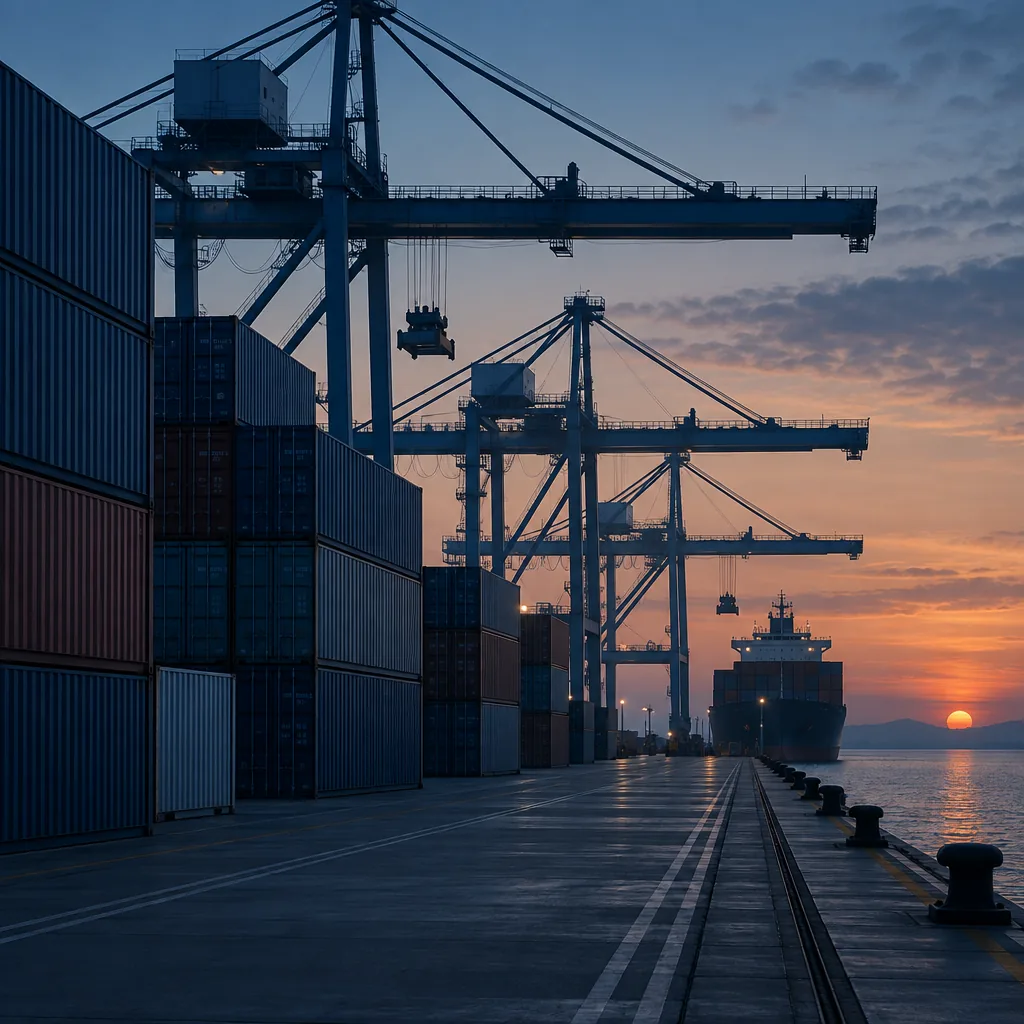
About the Port of Suez
The Port of Suez is a container terminal situated in Egypt on the coast of Egypt, in a major maritime region. Its operating coordinates of 29.9668° latitude and 32.5498° longitude place the port in mixed waters — connected to regional and intercontinental shipping networks. Like other container terminals in this part of the world, the harbour is built around the handling of cellular container vessels equipped with twin-twenty cell guides, ranging from feeder ships of 1,000–3,000 TEU up through neo-Panamax and ultra-large container vessels exceeding 18,000 TEU. Quayside operations rely on ship-to-shore (STS) gantry cranes with outreach capable of handling 22-row-wide vessels, supported by RTGs, RMGs, or straddle carriers in the yard, and reefer plug-in capacity for refrigerated containers.
Harbor Watcher identifies this facility under UN/LOCODE EGSCS, the five-character country-and-port identifier maintained by the United Nations Economic Commission for Europe (UNECE). The first two characters (EG) denote Egypt under ISO 3166-1, and the trailing three characters resolve to the specific port location. UN/LOCODEs are used universally in carrier booking systems, customs filings such as the European ENS and U.S. AMS, electronic data interchange under UN/EDIFACT, and the IMO FAL Convention single-window architecture. When you see this code on a bill of lading, sea waybill, or container terminal pre-advice, it always refers to the same physical port no matter which carrier or freight forwarder issued the document. The full UN/LOCODE registry can be searched at UNECE UN/LOCODE registry.
Across the most recent reporting cycle Harbor Watcher shows 2 distinct vessels associated with the Port of Suez. The active mix at this terminal is dominated by 1 refrigerated cargo vessel, 1 lng carrier vessel. Looking at this composition tells operators a great deal about the port’s real-world specialisation: a heavy bias toward container tonnage points to a port deep in the global liner network, with weekly fixed-day services and on-dock rail; a leaning toward bulk and tanker calls usually means the port serves nearby industrial customers — power stations, refineries, steel mills, agricultural exporters — whose berthing windows are negotiated through long-term contracts of affreightment rather than through the spot market.
The vessel position estimates shown above are derived from publicly broadcast AIS (Automatic Identification System) data. AIS uses VHF transceivers carried aboard SOLAS-class vessels to broadcast static information (vessel name, IMO, MMSI, type, dimensions) and dynamic information (position, course, speed, heading, navigational status) on a continuous schedule. Coastal receivers and satellite constellations aggregate these broadcasts into the public datasets that Harbor Watcher and similar directories consume; a more technical overview is published at the public AIS overview at NavCen.
If you are researching the Port of Suez for a specific commercial purpose — diverting a shipment around a labour disruption, comparing carrier coverage between competing gateways, or monitoring the build-out of a new terminal — the Harbor Watcher profile is intended as a fast first pass rather than the definitive source of record. For berthing-window depth and air-draft constraints, refer to the most recent edition of Lloyd’s Ports of the World, the port authority’s own published handbook, or the Notice to Mariners issued by the relevant national hydrographic office. For live operational status during a port call, use your shipping line’s vessel agent or the port community system (PCS) credentials issued to your forwarder. Harbor Watcher aggregates and republishes public reference data; it does not replace pilotage information, hydrographic charts, or formal port operational publications.