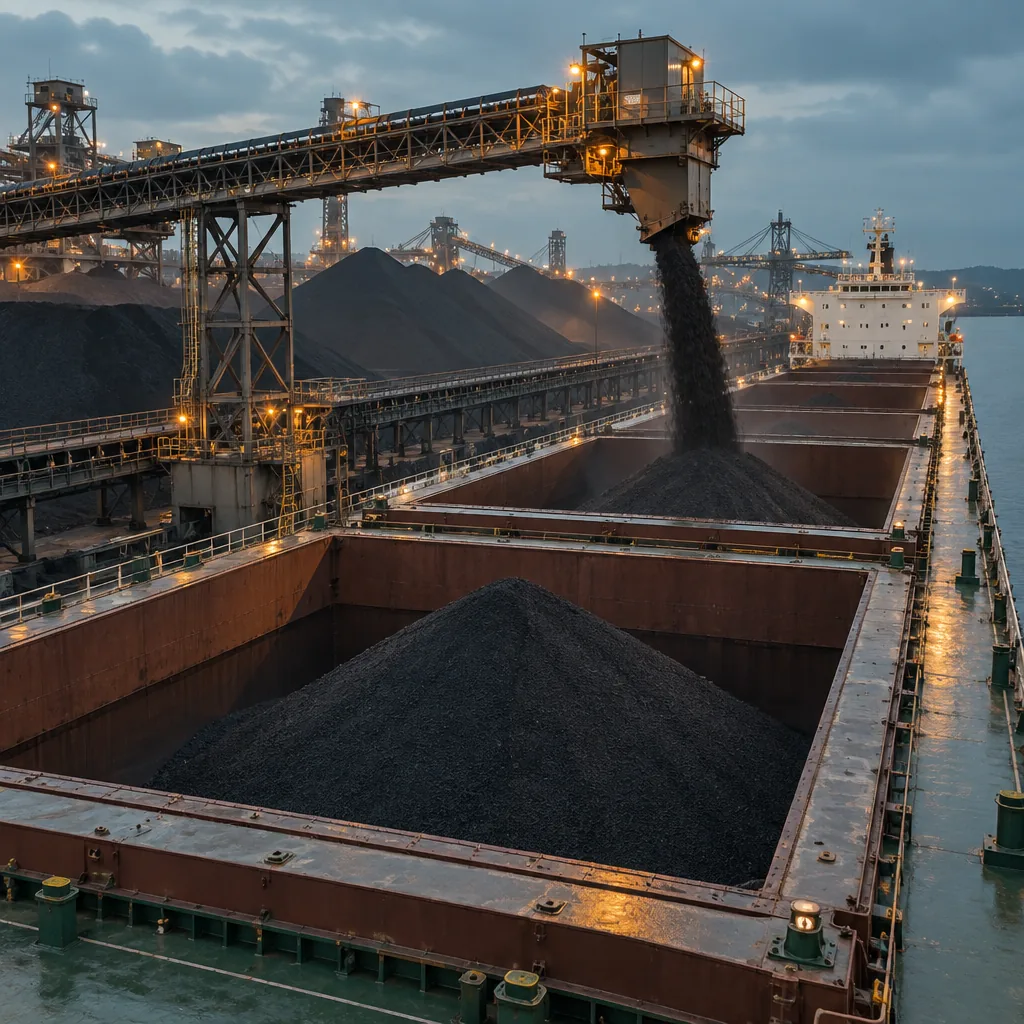
About bulk carrier operations
Harbor Watcher classifies vessels by AIS-reported type. The Bulk Carrier classification covers Capesize, Panamax, Supramax and Handysize bulk carriers loading or discharging iron ore, coal, grain, bauxite, alumina, fertilisers, and other dry bulk commodities. Discharge typically uses ship-mounted or shore-based grab cranes, continuous unloaders, or pneumatic systems for grain, with covered conveyor lines feeding stockpile yards and onward rail or barge evacuation. Across the indexed dataset there are currently 22 vessels in this category calling at 22 distinct ports, with the heaviest concentrations at the gateways listed in the panel above.
Operationally, bulk carrier tonnage is measured in tonnes of dry bulk cargo handled, and the design of any port that handles this tonnage in volume reflects the cargo’s physical and chemical characteristics. Berth depths, crane outreach, yard layout, hazardous-materials zoning, and the connecting rail or pipeline infrastructure are all dictated by what the vessel is carrying. Because of this, the same shipping company will typically use very different terminals for very different parts of its fleet — even within the same port complex.
For a country-specific breakdown of bulk carrier activity, choose a maritime nation from the countries directory and follow the vessel-type link in its profile; Harbor Watcher maintains a dedicated page for every meaningful country × vessel-type intersection, indexed for both browsing and search.